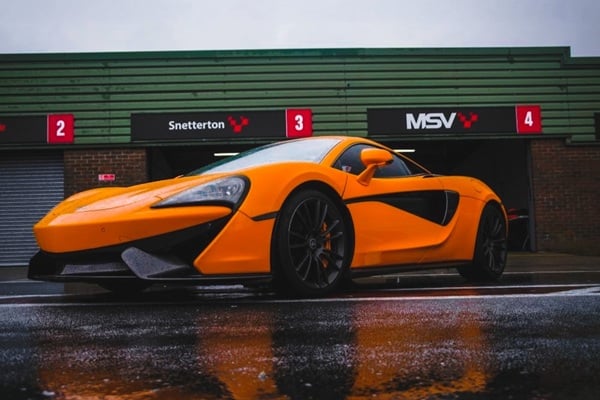
There was a time - not that long ago - when Formula 1 cars and your average road car had about as much in common as a cheetah and a cow. Sure, they both had four wheels, a steering wheel, and an engine that went vroom, but that was where the similarities ended.
One was engineered by the finest minds in motorsport, built in spotless laboratories using exotic materials and cutting-edge science. The other was assembled in a warehouse in Swindon and came with cup holders.
But here we are in 2025, and the game has changed. Today, F1 technology in road cars isn't just a clever marketing ploy - it's very real, very fast, and in some cases, very expensive.
The Hybrid Revolution: Thank F1 for That
Let's get one thing out of the way. Hybrid cars used to be the automotive equivalent of unsalted rice cakes: dull, virtuous, and mostly driven by people who wear sandals with socks. But thanks to Formula 1's hybrid era - kicked off properly in 2014 with the introduction of turbo-hybrid power units - hybrids have become, dare I say it, cool.
Take the Mercedes AMG One, for instance. It is, to put it scientifically, utterly mad. Under the bonnet lives a 1.6-litre V6 engine that screams like a banshee at 11,000rpm. It's based on the exact same unit Lewis Hamilton once used to win Grands Prix. Not similar. Not inspired by. The exact engine, albeit with a few tweaks to stop it catching fire every 20 minutes.
And around that nuclear core are four electric motors and enough energy recovery systems to make your house look like a Victorian factory. The result? A supercar that goes from 0 to 124mph in under six seconds. That's not a typo. Six.
Ferrari SF90: The Gentleman Hooligan
If Mercedes is delivering its F1 DNA with all the subtlety of a jackhammer, Ferrari's approach is a touch more... Italian.
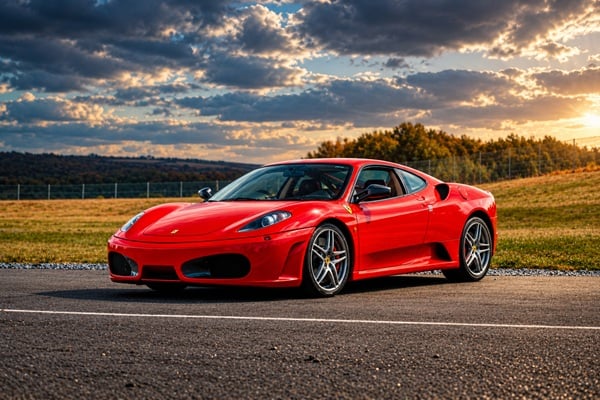
The Ferrari SF90 Stradale is a hybrid performance car that marries a twin-turbo V8 with three electric motors. Combined, you're looking at nearly 1,000 horsepower - more than enough to ensure your spine detaches from your body if you sneeze while accelerating.
But here's the clever bit: it doesn't feel like a science experiment. The hybrid system isn't there to save the planet. It's there to make you faster.
Whether you're crawling through Knightsbridge or hammering round Monza, the SF90 delivers F1-inspired performance with all the drama of a soap opera in Rome.
This isn't just marketing fluff. The influence of F1 is baked into the chassis, the software, the aerodynamics. Active aero elements shift and flex to keep the car glued to the tarmac. Torque vectoring from the electric motors makes you corner like a housefly on Red Bull. It's a rolling, howling, €500,000 tribute to the red cars that dance through Eau Rouge.
McLaren Artura: Less Shout, More Science
Then there's McLaren. The quiet genius of the paddock. If Ferrari is the operatic extrovert and Mercedes is the German overachiever, McLaren is the cool kid in glasses who builds robots in his garage.
The McLaren Artura might not have quite the same theatre as its Italian and German rivals, but its engineering is straight out of Woking's F1 lab. A V6 hybrid with a monocoque made of carbon fibre so light it practically floats, the Artura is a textbook case of F1-derived technology in a road car.
You get a seamless hybrid system with electric-only driving for the school run and face-melting power for the twisty B-road home. The cooling systems, battery management, and even the way the engine communicates with the gearbox are all pulled from the race track. It's basically Lando Norris with number plates.
F1's Adaptability: Roadmaps Written in Rubber
It's not just the tech specs that filter down from the track. It's the thinking. The way F1 teams adjust to different circuits - lower downforce for Monza, high downforce for Monaco, brake cooling for Bahrain - is inspiring how manufacturers think about versatility and adaptability in performance cars.
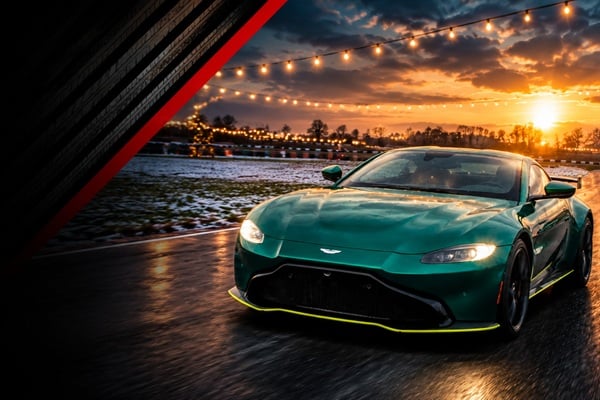
Take active suspension systems. These once-exotic, ultra-expensive pieces of F1 trickery are now found in cars like the Porsche 911 Turbo S and the Aston Martin DBX707. Your car can now read the road ahead, brace itself for impact like a soldier in a pub fight, and deliver a smoother ride than a buttered seal on ice.
Even tyre tech has had a glow-up. F1's data-driven approach to tyre degradation and grip levels is influencing how manufacturers work with Michelin, Pirelli, and the rest to build smarter, more adaptive rubber for the road. We're not quite at self-aware tyres yet - but give it a couple of years and your car might start texting you when it's cold.
The Future: F1 as a Test Lab for the World
Let's be clear: F1 isn't about making road cars better. It's about going as fast as physics will allow without accidentally launching someone into orbit.
But the by-products of that obsessive pursuit of speed are landing on driveways everywhere - from BMWs with predictive cooling to Teslas with torque vectoring that feels suspiciously familiar.
In 2025, the question isn't whether Formula 1 is influencing road cars. It's how much, and what's next. Will we see kinetic energy recovery in hatchbacks? Aerodynamic flaps on SUVs? Will your mum's Peugeot learn to DRS?
I wouldn't bet against it.
Final Thought:
So next time someone tells you Formula 1 is a waste of money, a billion-pound ego contest for millionaires who can't park, remind them of this: Without F1, we wouldn't have hybrid supercars that outpace fighter jets, or road tyres that talk back, or dashboards that calculate G-forces. We'd all still be in beige saloons that smelled like biscuits.
Formula 1 isn't just the pinnacle of motorsport. It's the R and D department for your next car. And thank heavens for that.
 0
£0
Basket