Formula One is not just about lap times and champagne sprays. It's a ruthless ecosystem of brains, ambition, and, occasionally, absolute madness. It's about people as much as pistons - individuals who, through brilliance or sheer stubbornness, carved their names into the carbon fibre of history.
So, here they are. The drivers, engineers, medics, moguls, mavericks, and mischief makers who've shaped the sport. The list isn't tidy. Influence never is.
Michael Schumacher
To understand Schumacher's impact, you have to remember what Formula One was before he arrived. Fast? Sure. Dangerous? Absolutely. Professional? Occasionally. But clinical? Relentless? Mechanised to the point of madness? Not quite - until the German arrived in the early 1990s like a heat seeking missile.
He trained like a triathlete, lived like a monk, and drove like he was racing for the future of mankind. He wasn't just a driver. He was a system. A cold blooded race day weapon paired with Ross Brawn and Jean Todt, turning Ferrari from sentimental underachievers into a title devouring factory.
Seven world championships, 91 wins, and a legacy that made every young karter believe they needed more data, more muscle, and a team that worked like a war room. F1 has never quite returned to innocence since. And that's probably for the best.
Bernie Ecclestone
Bernie didn't race. He didn't build engines. He didn't tune suspensions. He simply saw what F1 could become - then bullied, begged, and business dealed it into reality. Before him, Formula One was a dusty gentlemen's pursuit played out on European airfields. After him, it was a jet set, money churning, global brand. Monaco to Malaysia. Bahrain to Boston, nearly.
He monetised the broadcast rights, turned team owners into brand ambassadors, and made circuits pay for the privilege of hosting a Grand Prix. Ruthless, yes. Visionary? Unquestionably. He was part circus ringmaster, part Bond villain. But the circus got bigger, richer, shinier - and so did the paddock.
Would Drive to Survive exist without Bernie's blueprint? Unlikely. He built the stage; Liberty just added mood lighting.
Adrian Newey
If Formula One had a Hogwarts, Adrian Newey would be teaching Aerodynamics 501 while levitating past lesser mortals. He is a man who has made his name not by talking, but by drawing. Hand-drawn designs, to be specific. Yes, the man still sketches cars with pencils. And they still beat computers.
Newey has engineered title winning cars with Williams, McLaren, and Red Bull. His machines have won championships across four decades. He understands airflow the way dolphins understand sonar - innately and with lethal efficiency. Watching him speak is like hearing Beethoven describe a piano. Quiet brilliance. Controlled wizardry.
His most recent creation, the Red Bull RB19, wasn't just dominant - it was an insult to the rest of the grid. The kind of car that made you wonder why anyone else bothered showing up on Sunday.
Murray Walker
Commentators today speak with polish. They've got stats, graphics, and 16 cameras to help them sound clever. Murray Walker had none of that - and yet he made races feel like end-of-the-world events mixed with pantomime.
His style was a glorious mess of verbal somersaults, heart-on-sleeve emotion, and the occasional unintentionally hilarious gaffe. ("The car in front is absolutely unique, except for the one behind it, which is identical.") And yet, through all the blunders and noise, he made you feel the racing.
He was the sport's narrator, its emotional barometer. When Senna passed, Murray didn't need a script. When Damon Hill crossed the line in 1996, his voice cracked with a nation's pride. He made you care, even when the racing was rubbish.
Max Mosley and Professor Sid Watkins
Mosley was the rulebook. Watkins was the conscience. Together, they pulled F1 out of the dark ages of fatality and into the era of survivability. After the tragic 1994 San Marino Grand Prix, where Roland Ratzenberger and Ayrton Senna lost their lives, the sport faced a reckoning.
Max Mosley, FIA President, pushed for sweeping changes: headrests, higher cockpit sides, HANS devices. Not all were popular. Some were resisted. All were necessary.
Watkins, meanwhile, was the man in the medical car. He treated champions trackside, restructured safety response, and created the modern motorsport medical system. You don't see their influence when a car crashes - but you do when the driver walks away.
Enzo Ferrari
He didn't care about money. Or drivers. Or rules. Only victory. Enzo Ferrari was the original iron-fisted team boss. A man who built cars not to sell, but to race. A man who let world champions go without blinking. He demanded absolute loyalty and offered none in return.
But he also created the most iconic team in motorsport history. The prancing horse. The scarlet sea. The tifosi. Ferrari has transcended Formula One - and Enzo's ghost still lingers in Maranello's corridors.
Even today, every Ferrari win is not just a victory for a team - it's a restoration of a myth.
Toto Wolff
While others shout, Toto calculates. Part owner, team principal, and occasional TV villain, Wolff has turned Mercedes into a dynasty. Eight straight constructors' titles. Seven drivers' titles. And one furious Dutchman who's finally broken the streak.
Wolff manages people like a hedge fund. Everyone has value, but no one is irreplaceable. He has balanced innovation with control, charisma with steel. His relationship with Lewis Hamilton is part masterclass, part bromance.
More than that, he's redefined what a team boss looks like: educated, multilingual, terrifyingly calm. If you had to bet your house on someone winning a constructors' title in the next decade, you'd call Toto.
Lewis Hamilton
Hamilton didn't just win. He broke the rules of what a racing driver could be. A mixed race kid from Stevenage who became the face of the sport, the fiercest on track and the most talked about off it.
Seven world titles, over 100 wins, and a legacy that stretches beyond racing. He's been the sport's loudest voice on diversity, sustainability, and social justice. Critics call it virtue signalling. The paddock calls it leadership.
On track, he's surgical. Off it, he's a pop-culture entity with friends in fashion, music, and Silicon Valley. He made F1 cool for the first time in a generation - and now he's moved to Ferrari to try to become immortal.
Hannah Schmitz
You don't see Hannah Schmitz unless things are going very right - or very wrong. As Red Bull's lead strategist, she's been the brains behind some of Max Verstappen's most outrageous victories. She doesn't drive. She doesn't engineer. She is one step ahead of the rest of the grid.
Tyre deg, undercuts, virtual safety cars - it's all just data until she decides what matters. Her cool head in chaos has turned boring races into tactical masterpieces.
In a sport obsessed with visible heroes, she's made brains brilliant again.
Laura Müller
Not many race engineers get talked about. Fewer still become pioneers. Laura Müller became the first female race engineer in F1 with Haas. Her ascent through a male dominated world has been both rare and necessary.
But this isn't a diversity box-tick. She's smart. She's methodical. She speaks driver. And her presence alone signals a cultural change the sport can no longer ignore. F1 is evolving - and engineers like Müller are writing the code.
Ruth Buscombe
Buscombe has gone from data labs to pit walls to TV studios, and in each role she's brought clarity and cleverness. A Ferrari trained strategist with a knack for breaking things down for us normal folk, she has been instrumental in modernising the way teams approach decision making.
In the era of AI predictions and strategy overlays, she was the human version first - sharp, assertive, and calm when the world turned red flag.
Max Verstappen
At this point, Verstappen doesn't win races - he erases them from memory. Dominant. Unbothered. Explosive when crossed. He drives like the car owes him money, and the stopwatch never lies. Critics used to call him reckless. Now they call him champion.
He doesn't do PR fluff. He doesn't post gym selfies. He just races like a man with a grudge against traffic. A generational talent who's dragging Red Bull into the record books one win at a time.
Oscar Piastri
Smooth. Precise. Not quite Verstappen, not quite Leclerc - but his own cool blooded threat. There's an old soul in the helmet. He's the sort of driver who doesn't light up the timing screens until you notice he's right behind the leader. Again.
In an age of branding and noise, Piastri simply races - and wins. Watch this space. Closely. (Please don't let the team down)
The Final Lap
This sport doesn't move forward on petrol alone. It moves because of people - misfits, geniuses, obsessives, and the very occasional lunatic with a clipboard.
F1 is a brutal, beautiful machine powered by those willing to stare down physics, risk, and reputation. These are the ones who changed it forever.
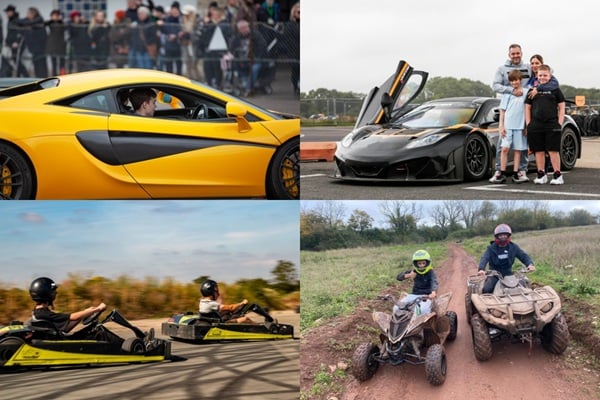
If reading about legends has you itching to unleash your inner Verstappen or channel a bit of Schumacher precision, you don't need to wait for a contract with Ferrari. Our F1 Driving Experiences put you behind the wheel of real single-seaters on proper circuits, guided by experts who know the racing line like their own pulse.
It's not a simulator. It's not a theme park. It's your chance to feel what they feel - brake late, turn in, power out, and hear that engine echo like destiny. Book your experience today, and stop dreaming about racing. Start doing it.
 0
£0
Basket
0
£0
Basket