Dashboard Warning Lights – What Do They Mean?
Seeing an engine warning light flash on your car's dashboard can be unsettling, but there's no need to panic. This article explains the meanings of various warning lights, why they appear, and the steps to take when you see them.
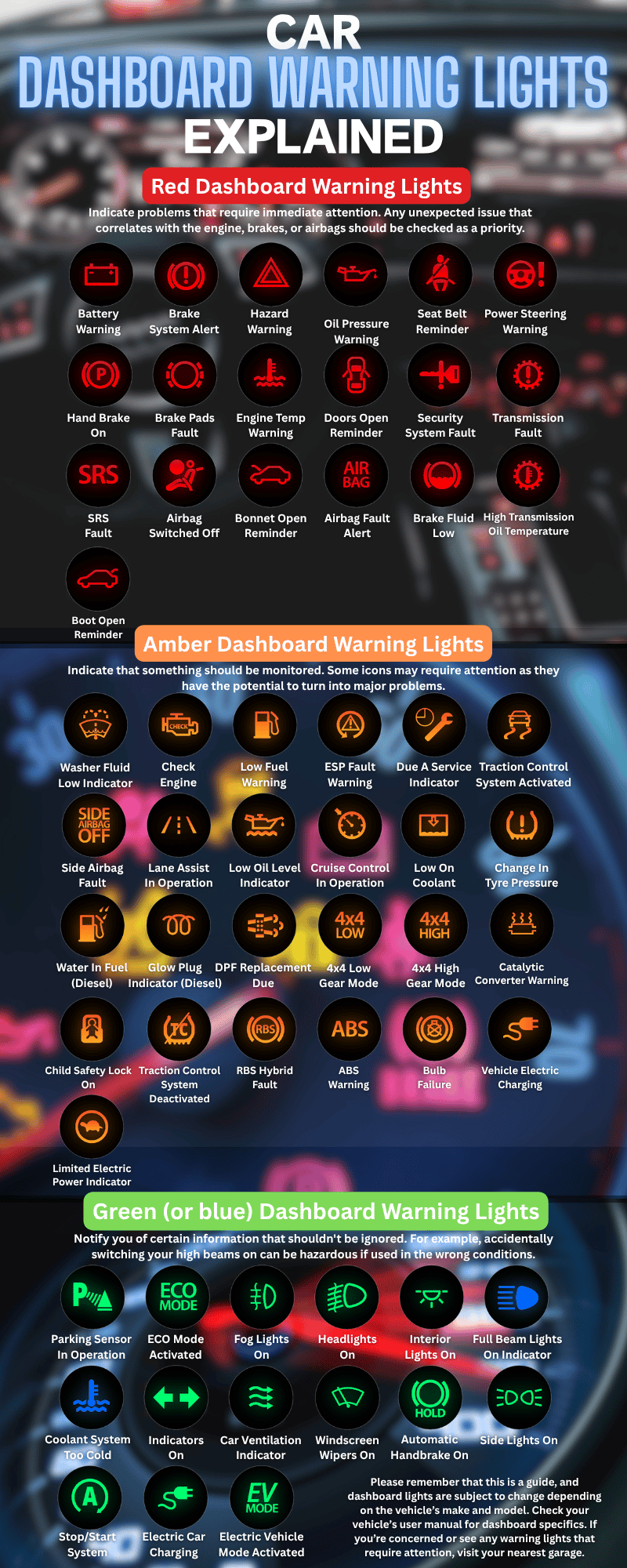
Car warning lights are typically displayed in four different colours, depending on the type and severity of the warning. The location of these icons varies between cars, so consult your vehicle's user manual to learn what the warning lights on your dashboard mean. The infographic below provides a list of common warning lights you might encounter.
Whether you're a new learner or a seasoned driver, this quick infographic is a handy go-to if a warning light suddenly appears.
Car Warning Light Symbols
Now we're going to take a closer look at some of the more common dashboard warning lights, what might have caused them to appear, and what you should do if you see them.
Red Warning Lights
Battery Warning Light
Cause: If this light stays on a few seconds after starting your engine, it may indicate a problem with the alternator, battery, or electrical system. This means your car isn't charging the battery while driving, which could lead to the battery draining and the engine shutting down.
What to do: If the light comes on while driving, switch off any non-essential electrical devices such as heating, air conditioning, radio, charging devices, sat navs, and heated seats. Avoid stopping and turning off the engine immediately, as your car may not restart. Instead, continue driving carefully until you reach a safe place.
Brake System Alert
Cause: This light usually comes on if your handbrake is engaged. If the handbrake is released but the light remains on, it could indicate low brake fluid or a serious issue with the hydraulic brake system.
What to do: If your brakes feel soft, spongy, or the pedal sinks to the floor, stop driving immediately and call for roadside assistance. Even if the brakes seem normal, it's important to have them inspected by a mechanic as soon as possible.
Seat Belt Reminder Light
Cause: This light indicates that you or a passenger isn't wearing a seatbelt while the vehicle is in motion.
What to do: This is an easy but vital issue to fix. Ensure everyone in the car—front and rear passengers alike—is properly buckled up, as seatbelts are legally required for all occupants.
Power Steering Warning Light
Cause: This warning most commonly appears due to low power steering fluid, but it could also indicate a more serious issue with the system.
What to do: Safely pull over, turn off the engine, and check the power steering fluid level. If the light stays on after topping up, seek professional help as it may be unsafe to continue driving. If you've recently disconnected the battery, you may need to reset the steering system by turning the steering wheel fully left, then fully right, and driving slowly for a short distance.
Engine Temperature Warning Light
Cause: This light usually means your engine is overheating, often due to low coolant levels. Without enough coolant, the engine can become dangerously hot, potentially leading to severe and costly damage.
What to do: Pull over safely and allow the engine to cool before checking the coolant level under the bonnet. Use caution when opening the coolant cap, as hot steam may escape. If the coolant level is adequate but the warning light returns, there may be a more serious issue, such as a radiator leak or a blown head gasket. In that case, have the vehicle inspected immediately.
Doors Open Reminder Light
Cause: One of your car doors, the boot, or the bonnet isn't fully closed.
What to do: Safely pull over and check that everything is securely shut. If you're travelling with children, consider activating the child safety locks to prevent them from opening the doors while the vehicle is moving.
Airbag Fault Light
Cause: This light indicates a problem with one or more airbags or the airbag system.
What to do: Have the system checked by a qualified mechanic as soon as possible. If left unresolved, the airbag may fail to deploy in a collision — or deploy unexpectedly — putting you and your passengers at serious risk.
Amber Warning Lights
Check Engine Light
Cause: This warning means a sensor has picked up an issue with the engine or emissions system. It could be something minor, like a loose fuel cap, or a more serious fault, such as a malfunctioning catalytic converter.
What to do: Even if your car seems to be running normally, it's important to have the issue diagnosed at a trusted garage. A diagnostic scan will pinpoint the problem before it potentially leads to more expensive damage.
Tyre Pressure Warning Light
Cause: This light means your tyre pressure monitoring system (TPMS) has detected that one or more tyres are under-inflated.
What to do: You may have a slow puncture or simply need to top up your tyre pressure. As incorrect tyre pressure can affect handling and braking, it's important to stop safely and check all tyres. Inflate them to the recommended level, and if a puncture is found, either change the tyre or use a repair sealant until it can be properly fixed.
Diesel Glow Plug Indicator Light
Cause: This light suggests a problem with the glow plugs — heating elements that help start your diesel engine, especially in cold conditions.
What to do: It's normal for the light to briefly appear when starting the engine. However, if it stays on or flashes while driving, it could mean a fault with the glow plugs or the engine management system. Have your vehicle checked by a garage, as the glow plugs may need replacing.
ABS Warning Light
Cause: This light indicates a problem with the Anti-lock Braking System (ABS), which is designed to prevent wheel lock-up during emergency braking.
What to do: When ABS is functioning correctly, you may feel a pulsing sensation in the brake pedal during hard braking. If this doesn't happen, or if the ABS light stays on, have your car inspected as soon as possible. If both the ABS light and the main brake warning light are illuminated, it could signal a serious brake system fault — stop driving and seek immediate assistance.
Limited Electric Power Indicator Light
Cause: This warning typically means your vehicle's electric battery is running very low on charge. Depending on the model, your car may soon lose power or switch to backup fuel mode.
What to do: If you're driving a plug-in hybrid, the vehicle may begin using its petrol or diesel reserve. However, it's best to find and connect to a charging point as soon as possible. Keep an eye on the power gauge to track how much charge you have left during your journey.
 0
£0
Basket
0
£0
Basket