Flying Lessons For People With A Disability Or Visual Impairment
We have always aimed to provide our range of flying experiences to as wide a selection of people as possible. Which is why we are delighted to now be offering people with a disability or a visual impairment the opportunity to go skywards with our new collection of Accessible Flying Lessons!
This is the incredible opportunity to make your dreams of learning to fly come true! We are partnering with an incredible leading disability organisation, who have been in operation for many years, and whose key aim is to remove limits and provide disabled or visually impaired people the chance to experience fun, exciting and one-of-a-kind experiences, thrills and adventures for themselves, and build their confidence to enjoy the moments in life that really matter.
They are very well respected and praised by those who have gone on one of their flying experiences, and their passion really comes across in creating experiences for those with a disability that will provide lasting memories for years to come, so you can take peace of mind knowing we are working with only the very best.
Accessible Flying Lessons and Experiences
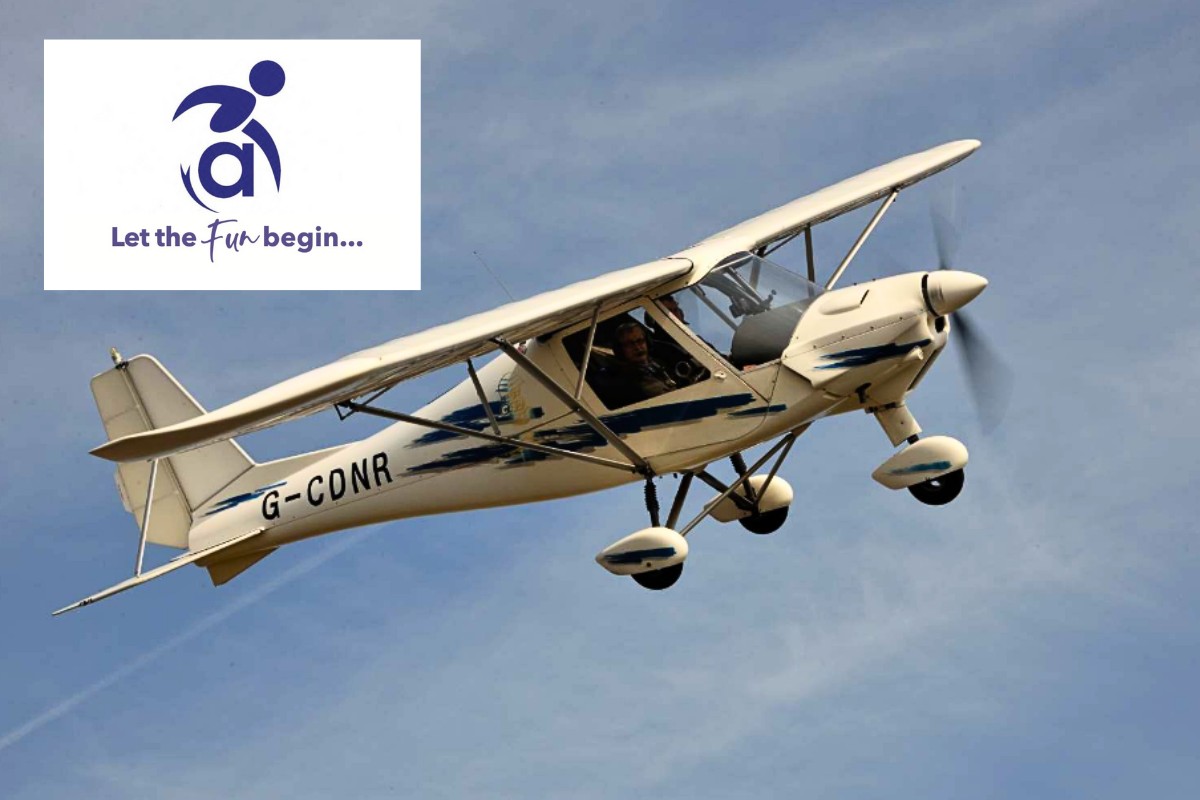
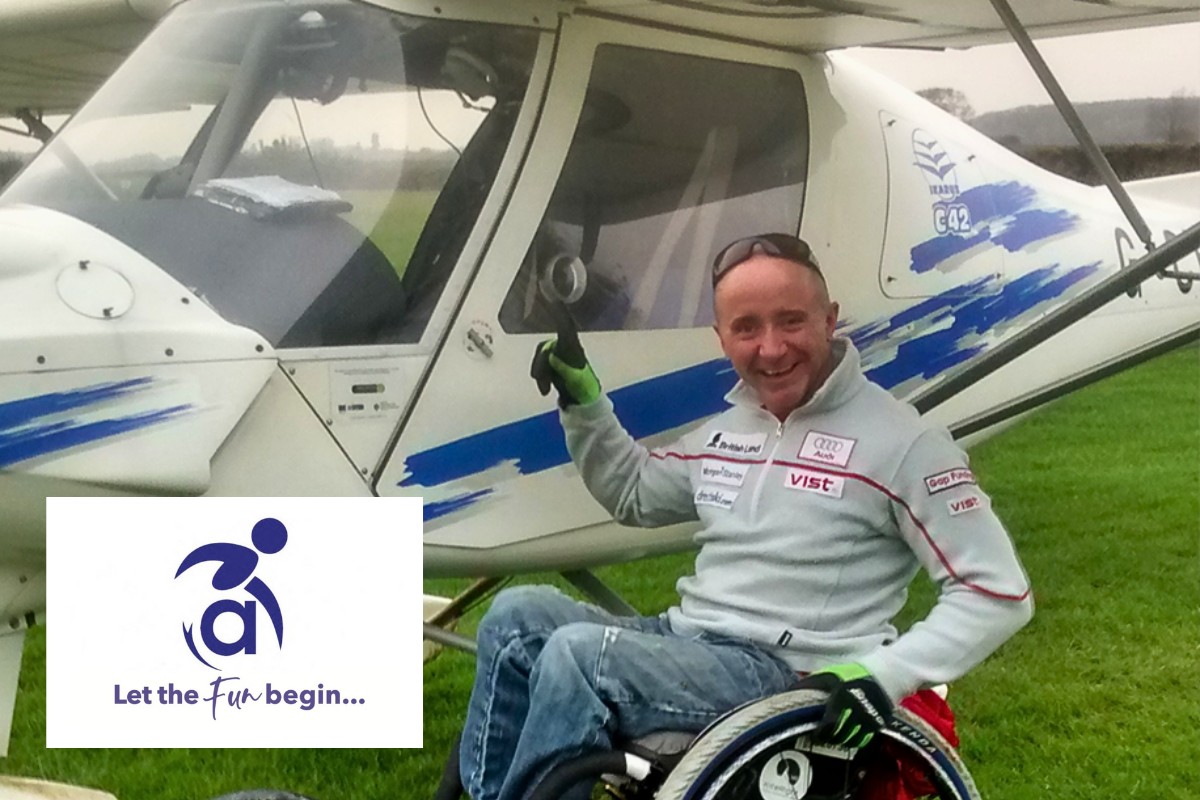
So, which aircraft will I be learning to fly on an Accessible Flying Lesson, we can hear you asking? Well, that would be the Ikarus C42, which is one of the very best fixed-wing light training aircraft around. It's a single-engined, high-winged, two-seater aircraft and is incredibly versatile.
Powered on either a 80 hp (60 kW) Rotax 912 or a 100 hp (75 kW) Rotax 912s engine, which drives the propeller, its fuel consumption is relatively low, as are the noise levels. It's also supported by a “backbone” of large diameter aluminium tube running the length of the aircraft. The cabin and fuselage shell is non-structural, but is made of a composite material that can be easily removed as and when needed for repairs or inspection.
The cabin itself is accessible by two Gull-wing doors, whilst the wings consist of tubular front and rear spars, and they can be folded or removed (if an optional folding kit is installed) for storage and transportation, with the tips being a composite construction that help reduce drag and improve low speed handling. The wings and flying control surfaces are coated in a Kevlar/Mylar/Polyester laminate.
There is a single centre stick, which controls the ailerons and elevators. The electrical pitch trim is controlled by two buttons on the top of the stick, operated by the thumb. A push to talk button is on the front of the stick, operated by the index finger, together with a vertical hand-operated brake lever similar to a motorcycle front brake lever.
There are also dual control rudder pedals, and the distance from the seat to the pedals is fixed because the seat position is not adjustable. The dual control throttle levers are situated between the legs, and pivot from side to side, and can be easily folded out of the way to help make entry and exit from the aircraft easier.
The flaps are controlled by a centrally-mounted lever on the roof of the cabin. The relatively short lever does make the operation of lowering flaps quite physical when combined with holding the centre control stick at the same time.
The Ikarus is the aircraft used on both the 30 and 60 minute Accessible Flying Lessons, hosted at Little Gransden Airfield in Cambridgeshire and Rochester Airport in Kent, and it is also used on our 1 Hour Castles Accessible Flight Experience at the latter venue, which is a trial flight with the chance to take in some of the most iconic landmarks in the Medway area of Kent, including ancient castles, the Thames estuary and the naval dockyards of Chatham.
Not only are these experiences approved by the Civil Aviation Authority (CAA), but the flying instructors used are fully qualified and have plenty of experience with helping to accommodate across the whole spectrum of disabilities and impairments, whether mental or physical disabilities, mobility issues, learning difficulties or sensory problems, neurological disorders or amputations as well as everything else in between.
Can People With A Disability Really Learn To Fly?
The answer is that whilst not everyone might be able to go on and hold a Private Pilot's Licence, everyone has got the opportunity to fly provided they can move something. What's more, our hand-picked selection of flying instructors who are well versed in supporting those with a disability and impairment combined with aircraft adaptations and other solutions all ensure that flying is as accessible as possible.
Of course, answering all questions relating to medical conditions and obtaining a PPL or an NPPL (National Private Pilot's Licence) are beyond a condensed explanation on this page.
However, we understand that every person with a disability or impairment is unique and has value. So upon redemption of your voucher, and the booking request being sent over to our leading supplier, a dedicated representative on their team will get in contact with you over the phone to complete a safety form with you.
This is to help them gain a better understanding of you and your disability or impairment, which will be shared with them only and no other parties. They'll then gather this information to help them confirm the booking and make the necessary arrangements to ensure this experience is completely bespoke to you and your requirements.
Booking an Accessible Flying Lesson or Experience
Getting an Accessible Flying Lesson or Experience booked in with us couldn't be simpler to take care of. Purchase one of our open Gift Vouchers that is valid to redeem and use for 12 months (or 14 months for an additional fee) and it can be used towards any of the packages you see listed above.
They're also a fabulous gift idea for any special occasion, including Birthdays, Christmas and many more besides. One thing's for sure, it's guaranteed to give you an enjoyable time up in the air that you'll remember for a long time to come!





 Hibaldstow Airfield